


Florida Motion to Dismiss: When and How to Challenge a Lawsuit
One procedural move can end a lawsuit before it really starts. In Florida courts, a motion to dismiss works as your first line of defense against legally weak claims. Thousands of civil cases get tossed out each year through well-crafted dismissal motions that expose fatal flaws in what plaintiffs filed.
In practice, this motion represents more than procedure. It determines whether your company commits months and resources to discovery, or exits a dispute early with minimal exposure. Saltiel Law Group's Miami business litigation attorneys regularly deploy this strategic tool to protect companies from baseless lawsuits. We analyze each complaint for weaknesses that can transform costly litigation into swift victories at the earliest possible stage.
Here's what you need to know about grounds, requirements, and strategy that determine whether dismissal makes sense for your case.

What Is a Motion to Dismiss in Florida?
A motion to dismiss challenges whether a complaint states a valid legal claim, even assuming all factual allegations are true. This pre-trial device allows defendants to attack legal sufficiency without engaging in expensive discovery or trial proceedings. The core question: does the plaintiff's complaint establish a prima facie case for relief, or does it fail as a matter of law?
From a business perspective, this procedural tool can determine whether a company spends months in discovery or exits a dispute before meaningful resources are committed.
Florida courts recognize several core principles governing dismissal motions:
- The court must accept all well-pleaded facts alleged in the complaint as true.
- Legal conclusions and speculation receive no such deference.
- The complaint fails if it shows on its face that relief is impossible.
- A prima facie case must appear from the four corners of the complaint.
- Dismissal occurs only when no possible amendment could cure the defects.
- Courts apply a de novo standard when reviewing trial court dismissal orders.
Effective dismissal strategy focuses on grounds that can actually end the case. Not every technical defect warrants filing — some simply give plaintiffs an opportunity to correct and refile.
When appeals courts review dismissal orders, they look at the legal issues fresh without giving the trial judge special deference.
Legal Grounds for Filing a Motion to Dismiss in Florida
Not every legal ground justifies filing a motion to dismiss. Effective litigation strategy focuses on defects that can realistically end or materially narrow the case at the outset.
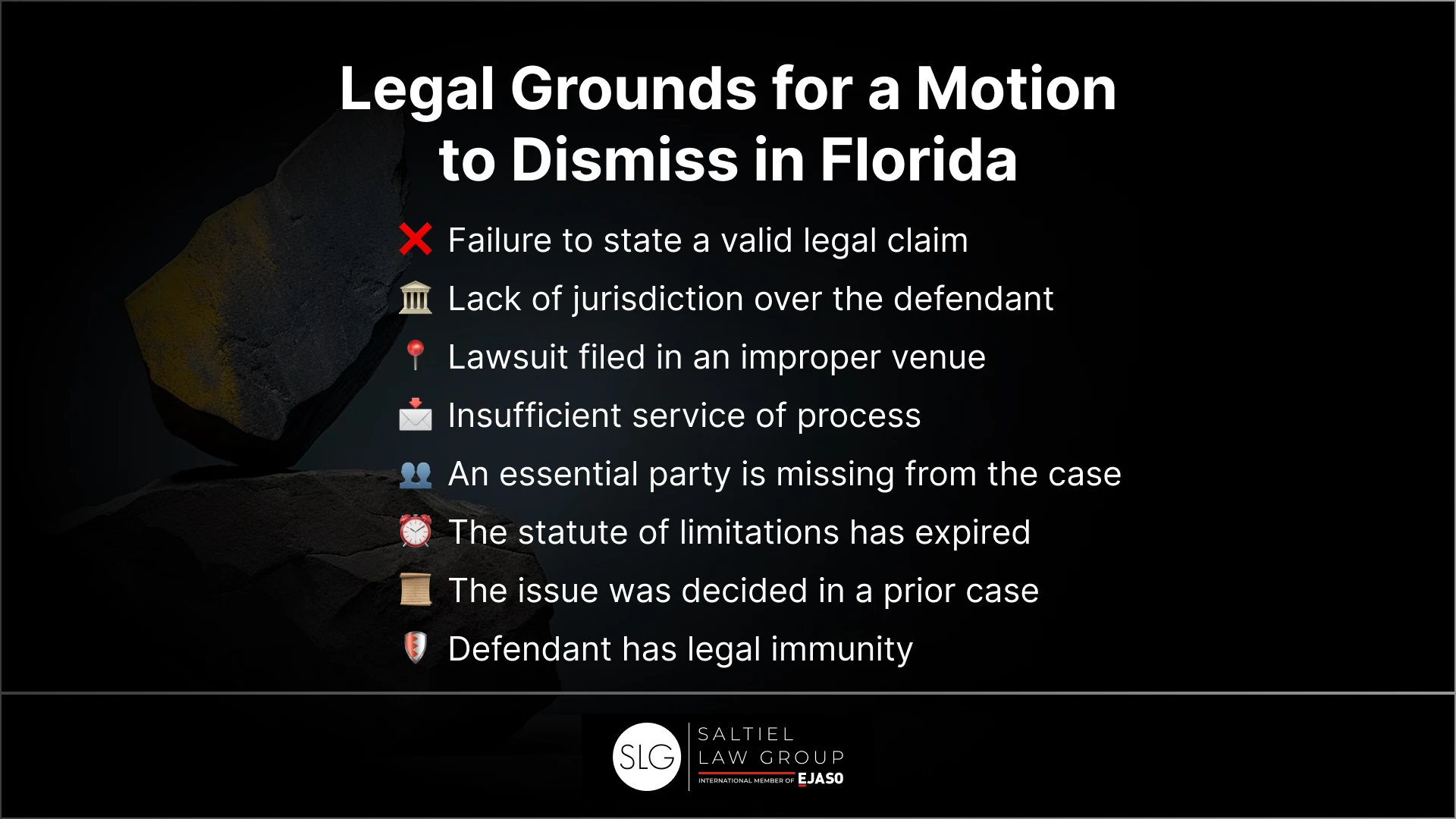
The most frequently successful grounds include:
- Failure to state a cause of action upon which relief can be granted
- Lack of personal jurisdiction over the defendant
- Improper venue or forum selection
- Insufficient service of process
- Failure to join an indispensable party
- Prior pending action between the same parties
- Res judicata or collateral estoppel based on previous litigation
- Release, settlement, or accord and satisfaction
- Statute of limitations expiration
- Immunity doctrines (sovereign, statutory, or qualified)
Criminal defendants face additional grounds specific to criminal prosecution, including double jeopardy violations, lack of probable cause, and constitutional defects in charging documents.
How to File a Motion to Dismiss in Florida: Step-by-Step Requirements
While the procedural requirements appear straightforward, missteps at this stage can waive defenses or strengthen the plaintiff’s position — making experienced review critical.
The 20-Day Deadline (It's Strict)
Florida Rules of Civil Procedure mandate strict timeframes. In civil cases, defendants must file within 20 days after service of the initial complaint. For criminal charges, the deadline varies based on the criminal offense and procedural stage.
Courts almost never grant extensions without extraordinary circumstances. If you're a Spanish or Mexican company served through Hague Convention procedures, you might get extra time, but you need to request it properly before your deadline expires.
What Documents You Need
Your motion package includes:
- The motion itself: List specific grounds with legal citations. Generic language won't work. Point to specific paragraphs in the complaint that fail legally.
- Memorandum of law: Back up each argument with Florida case law and statutes. If you're arguing jurisdiction issues as an international company, cite cases with similar foreign defendants.
- Proposed order: Write the order you want the judge to sign. This shows exactly what you're asking for.
- Certificate of service: Prove you sent copies to the other side's lawyer. Electronic service through the e-portal works for most cases.
- Supporting materials: Include any exhibits or documents you're referencing. If you're arguing improper service to a Colombian or Peruvian entity, attach proof showing the service defects.
These requirements look straightforward. In practice, procedural errors at this stage can waive defenses permanently or hand plaintiffs stronger positions than they started with.
Where to File Your Motion
File all documents with the clerk of the trial court where the case originated. Electronic filing through the Florida Courts E-Filing Portal is mandatory for attorneys in most counties. Self-represented parties may file paper documents directly with the clerk's office.
Finding Sample Motion Templates
The Florida Supreme Court has standardized forms for certain dismissal motions. Local bar associations offer practice guides with samples for specific Florida courts. Law libraries keep collections of successful motions organized by legal grounds and case types.
But templates need customization. A motion defending a Barcelona company against jurisdiction claims looks totally different from one challenging a contract claim's legal problems. Generic forms rarely win.
#cta_start
Calculate Your Exact Motion Filing Deadline
Upload your lawsuit documents for immediate review. Our litigation team will identify fatal legal defects, jurisdictional weaknesses, and procedural violations.
#cta_end
What Happens After You File
Once you file, specific deadlines kick in for everyone involved.
The other side typically gets 20 days to file a written response fighting your dismissal. They have to address each ground you raised and explain why the complaint meets legal standards. Smart plaintiffs often ask to amend their complaint rather than defending what they originally filed, especially when the problems are obvious.
Courts usually schedule hearings within 30 to 60 days of filing. Some judges decide based on the written submissions without oral argument. Miami-Dade judges typically hold brief hearings, while some Broward judges prefer written submissions. If the judge says no to your dismissal, you've got 10 days to file your answer.
When courts grant dismissal with leave to amend, plaintiffs get reasonable time (usually 20 days) to fix the problems you identified. Dismissal with prejudice ends the case for good, while dismissal without prejudice lets them refile if the statute of limitations hasn't run out yet.
Note: For international companies, language issues can make tight deadlines harder. Brazilian or Mexican companies should get bilingual Florida lawyers immediately after getting served to avoid missing critical filing windows.
From a business standpoint, successful dismissal motions often shift settlement dynamics, reduce litigation spend, or force plaintiffs to reassess weak claims. Even when a motion results in leave to amend, it can narrow the case and reset negotiations on more favorable terms.

Mistakes That Kill Your Motion
Strong legal arguments fail when you make procedural errors. These mistakes are not just procedural — they often undermine leverage, increase exposure, and prolong disputes unnecessarily.
1. Filing Outside the 20-Day Window
Missing the deadline ranks as the most devastating error. Courts treat late filings as waivers of dismissal rights. No excuse — not miscounted days, mail delays, or attorney scheduling conflicts — overcomes this strict requirement. The clock starts upon service, not when defendants actually receive or read the complaint.
2. Combining Dismissal Arguments with Affirmative Defenses
Motions to dismiss test legal sufficiency, not factual disputes. Defendants who argue "the contract was forged" or "plaintiff caused the damages" introduce facts outside the complaint. Courts must ignore these arguments, focusing solely on whether the complaint states valid claims. Save factual defenses for your answer or summary judgment motions.
3. Shotgun Pleading in Response to Shotgun Complaints
When plaintiffs file confusing, jumbled complaints, defendants often respond with equally scattered motions. This strategy backfires. Clear, organized motions that methodically address each defect force courts to confront the complaint's weaknesses. Match bad pleading with surgical precision, not chaos.
4. Forgetting the Meet-and-Confer Requirement
Many Florida jurisdictions require counsel to confer before filing dismissal motions. This obligation aims to narrow disputes and potentially resolve issues without court intervention. Skipping this step can result in denial of otherwise meritorious motions. Document all attempts to meet and confer, even when opposing counsel refuses to participate.

Time to Challenge Your Lawsuit?
A motion to dismiss can end weak claims before they drain time and resources. For companies facing litigation, the decision to file one should be guided by strategic judgment — weighing legal sufficiency, cost exposure, and long-term business risk.
Whether facing civil disputes or criminal charges, defendants benefit from early evaluation of dismissal opportunities. The difference between a costly trial and a quick resolution often lies in recognizing when the law itself provides your strongest defense. Saltiel Law Group's attorneys are ready to help. We handle litigation for international companies throughout South Florida. Our Miami attorneys work in Miami-Dade, Broward, and Palm Beach county courts. Schedule a consultation to evaluate whether your complaint has fatal defects that warrant immediate dismissal.

Tailored to You